



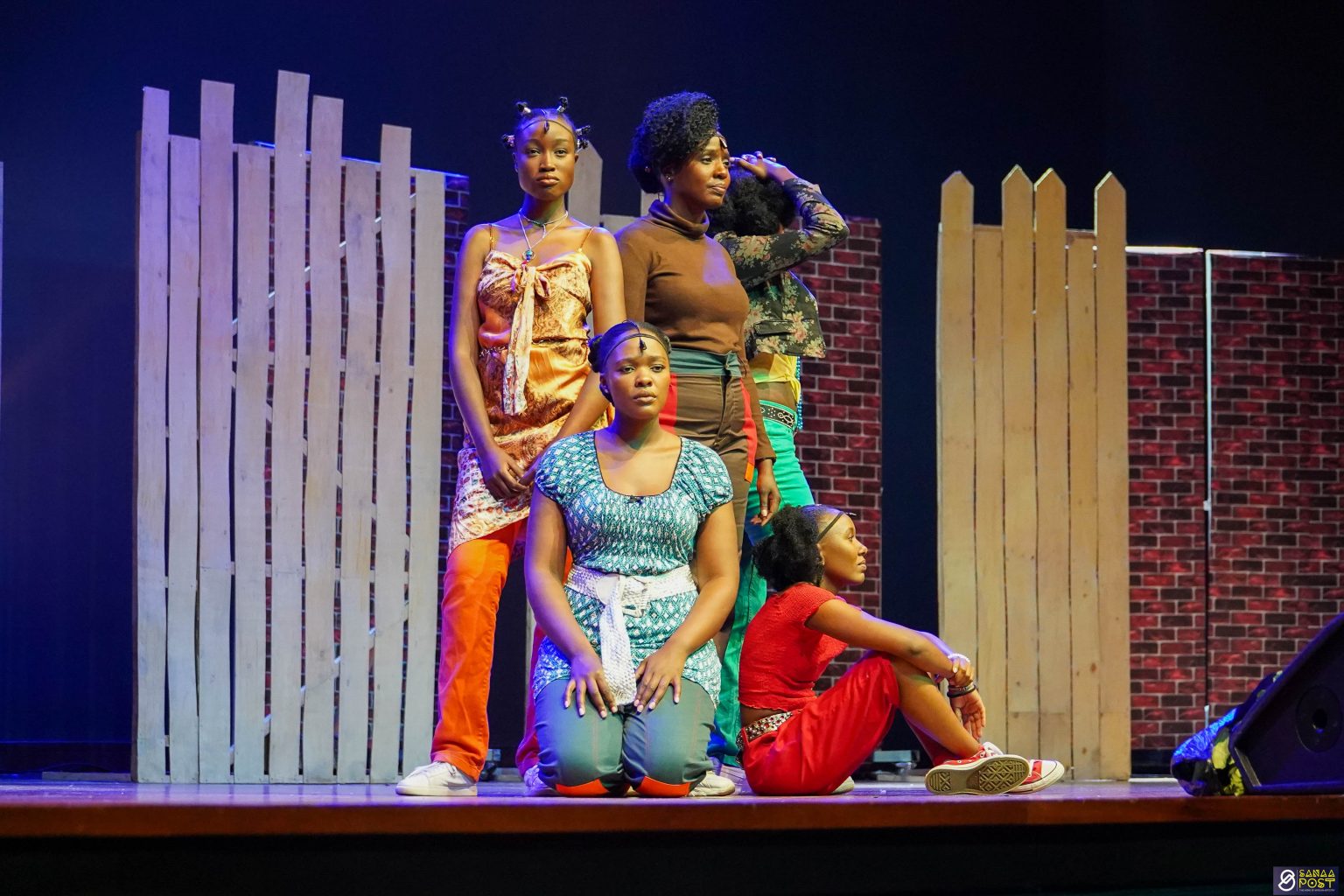

This is a moving, necessary piece of work, urgent in its telling, careful in its regard, and honest in the steady way it insists we look.
She’s not just someone’s mother, sister, or daughter. How about she’s just someone, a line that has continued to echo in my mind long after the play. Though heavily paraphrased, this serves as a very urgent reminder that the story we watched is not distant or symbolic but very much lived and an account of someone’s life. Free Me is, at its heart, a piece of testimony. It is a raw, unvarnished account of survival, and it does what testimony should do first and best: make us see a person.
Directed by Mugambi Nthiga and produced by Gathoni Kimuyu, the production follows Gathoni Kimuyu’s life from childhood through love, marriage, violence, and escape. Renee Gichuki, Nungari Kiore, Joan Cherono, Ellah Maina, and Gathoni Mutua carry different ages and states of a single life, and the effect is quietly powerful. In Nungari Kiore’s voice, this is not just “someone’s mother” or “someone’s sister” but simply “someone”, a person whose needs, fears, and hopes we are invited to meet. That insistence on full humanity is, for me, one of the play’s triumphs.
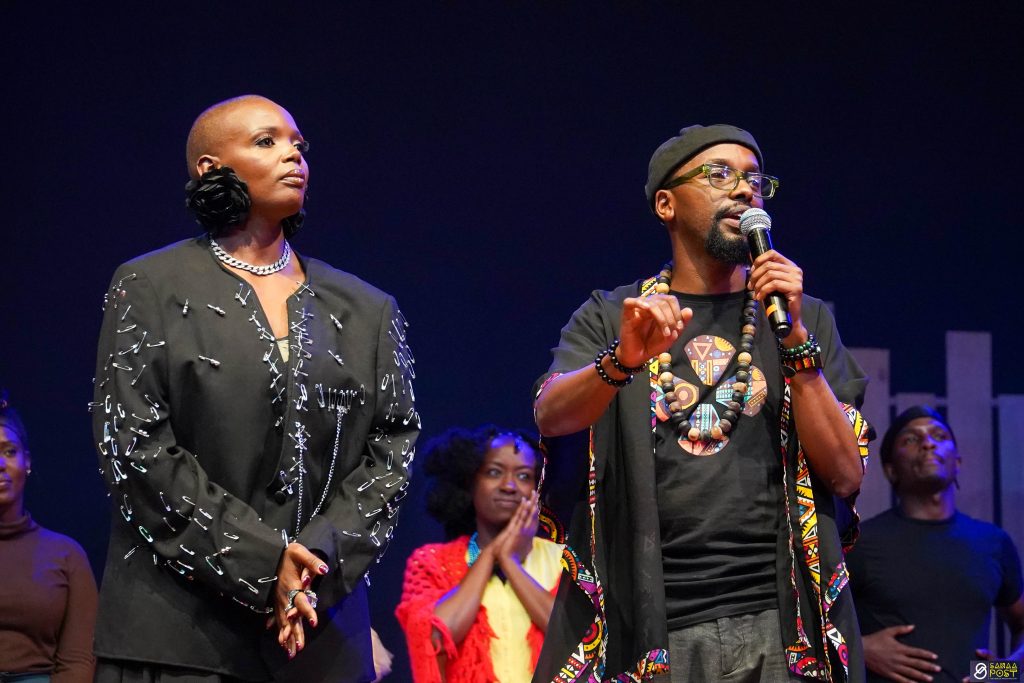
The staging feels immediate and intimate, with the lighting and sound sharpening the emotional geography and the strobes and abrupt cues disorienting in ways that echo the experience of violence, while close, careful performances keep the audience uncomfortably present. Tobit Tom, as masked Prince, is frightening precisely because he remains opaque, and the mask forces us to confront the acts and their effects rather than be seduced by explanation.
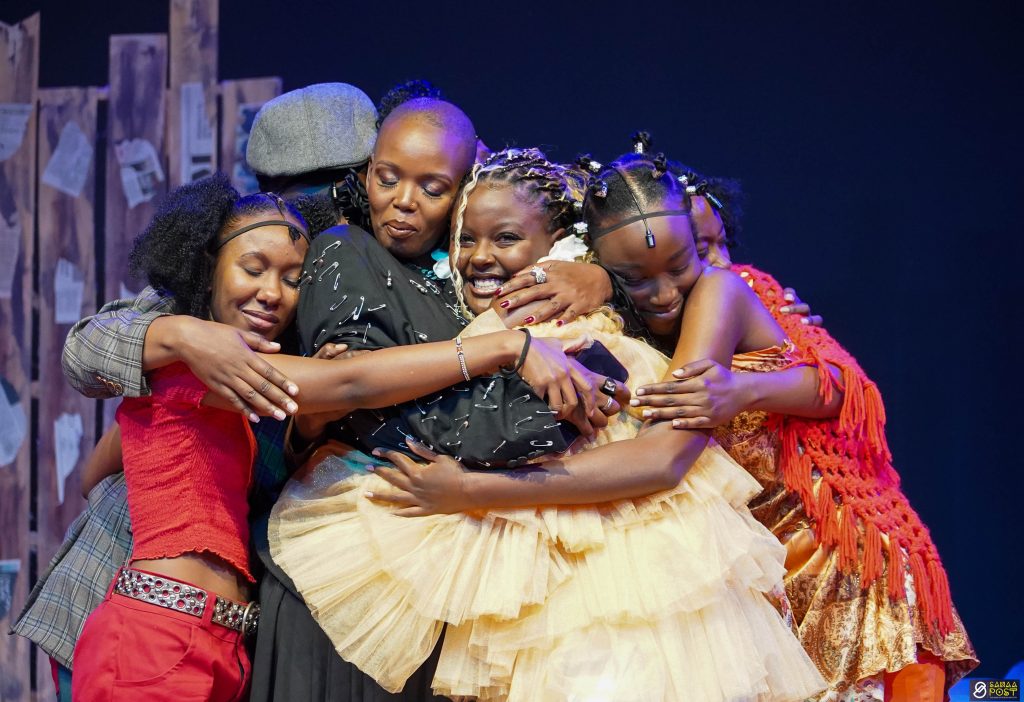
Mugambi Nthiga’s direction leans toward narration, as is characteristic of his previous works. The production often favors a clear through-line, a steady telling of events. That approach honors the testimony and preserves its clarity, making Gathoni’s voice intelligible and unblurred. At times, I found myself wishing for slightly deeper interiority from the characters, small textures that might let us glimpse the internal shifts that lead to decisive moments. David Hare, reflecting on his verbatim work, noted that documentary theater’s strength lies in its ability to “turn an ongoing, messy event into a comprehensible overview,” helping audiences “evaluate events that may be too big, too close, too recent.” Free Me gives us the messiness, the closeness, the recent pain. I would have also appreciated the other side of the coin, this overview and framework that helps us understand not just what happened to Gathoni, but why it keeps happening to other women in society. But that is a gentle wish, not a rebuke, as the play chooses to hold the story to the light rather than to pry it open completely, and there is dignity in that choice.
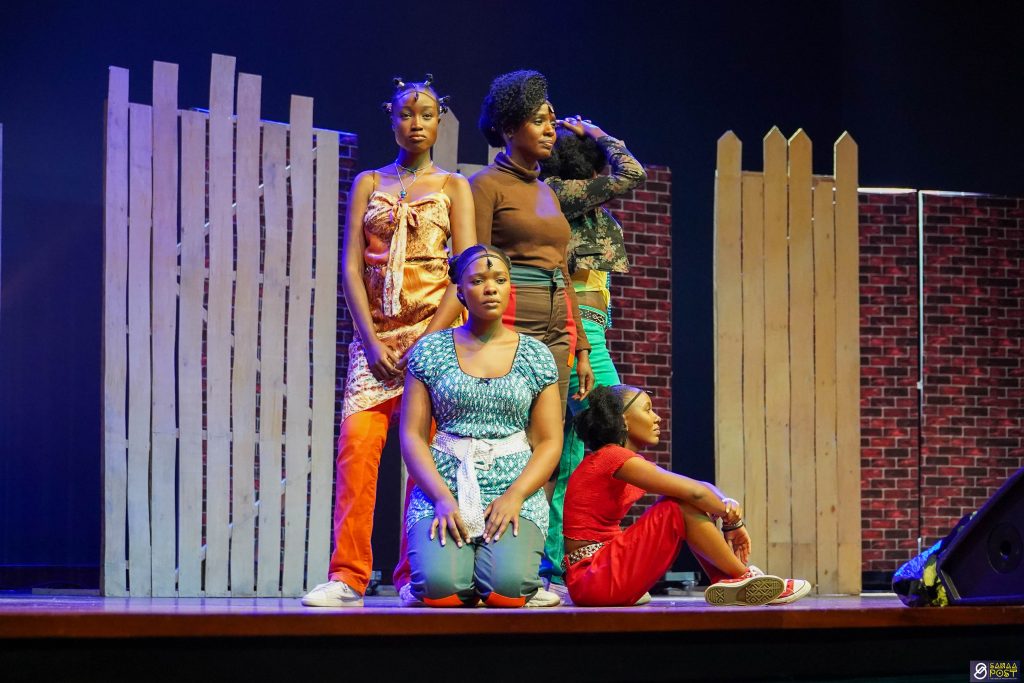
The play functions as a mirror, and it does not hand us every answer but loosens a thread and lets us begin to pull. That loosened thread dares us to start unraveling our own assumptions, to see the structures and human failures reflected at us, and to ask, in our own minds, what we might do differently. It leaves space for the audience’s reflection rather than closing the conversation with easy conclusions.
Testimony matters and so does theatre’s ability to translate testimony into communal recognition. Free Me does both; it honors one woman’s survival and, in doing so, invites us to recognize the humanity of the person on stage, and, by extension, the people among us.