



In 1971, Brazilian theatre director Augusto Boal published Theatre of the Oppressed, a work that would permanently alter how the world understands performance. Rejecting the idea of a passive spectator, Boal introduced the concept of the “spect-actor” who is an audience member empowered not just to watch a story, but to interrupt it, challenge it, and reshape it. His Forum Theatre and Image Theatre techniques, born out of political necessity in Latin America, have since spread to over 70 countries, used by practitioners in prisons, refugee camps, hospitals, schools, and conflict zones as a tool for dialogue, healing, and social change.
This body of practice meaning theatre made not for audiences but with them, in spaces beyond conventional stages, for purposes beyond entertainment, has come to be known broadly as Applied Theatre. Kenya has long had a version of Applied Theatre, operating under the labels Theatre for Development (TFD) and Theatre for Education (TFE). But these practices have typically been tethered to NGO programming with performances funded by external organisations to deliver specific development messages to communities. What has been largely absent is Applied Theatre as an independent creative and professional act, one that is self-initiated, self-funded, and artistically driven.
That changed last year when Vitalis Waweru, drawing on his formal studies in Applied Theatre, produced what is believed to be the first fully independent Applied Theatre production staged in Kenya without any donor or institutional backing. The significance of this is easy to miss until you consider what it means: a practitioner taking everything the discipline demands that is, participatory design, community facilitation, immersive environments, and intentional dialogue, and applying it independently, as a creative investment rather than a funded project.
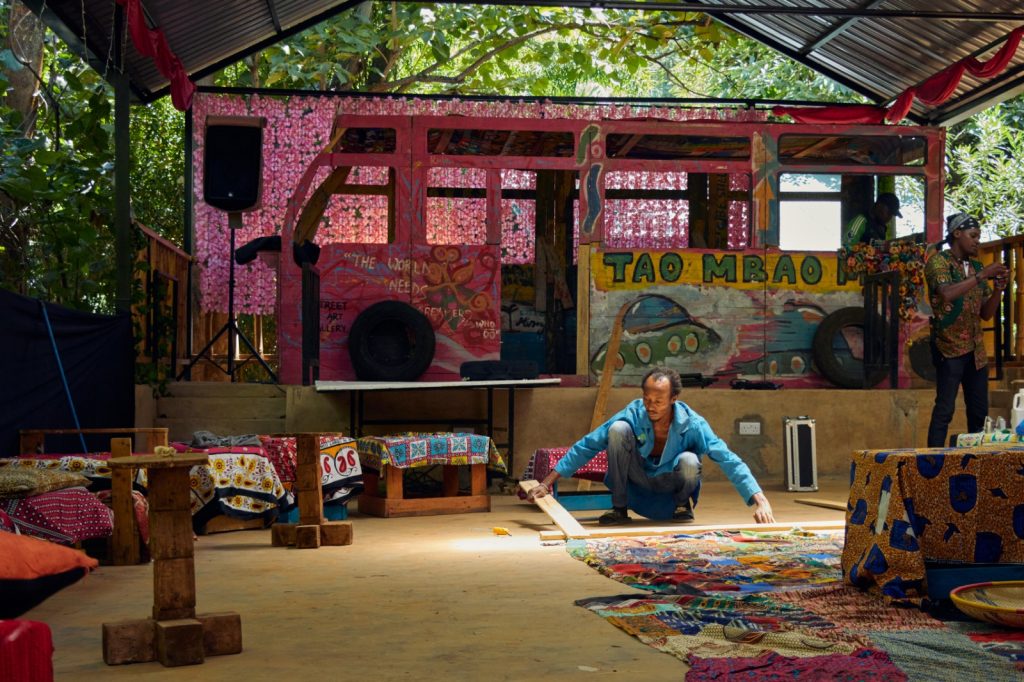
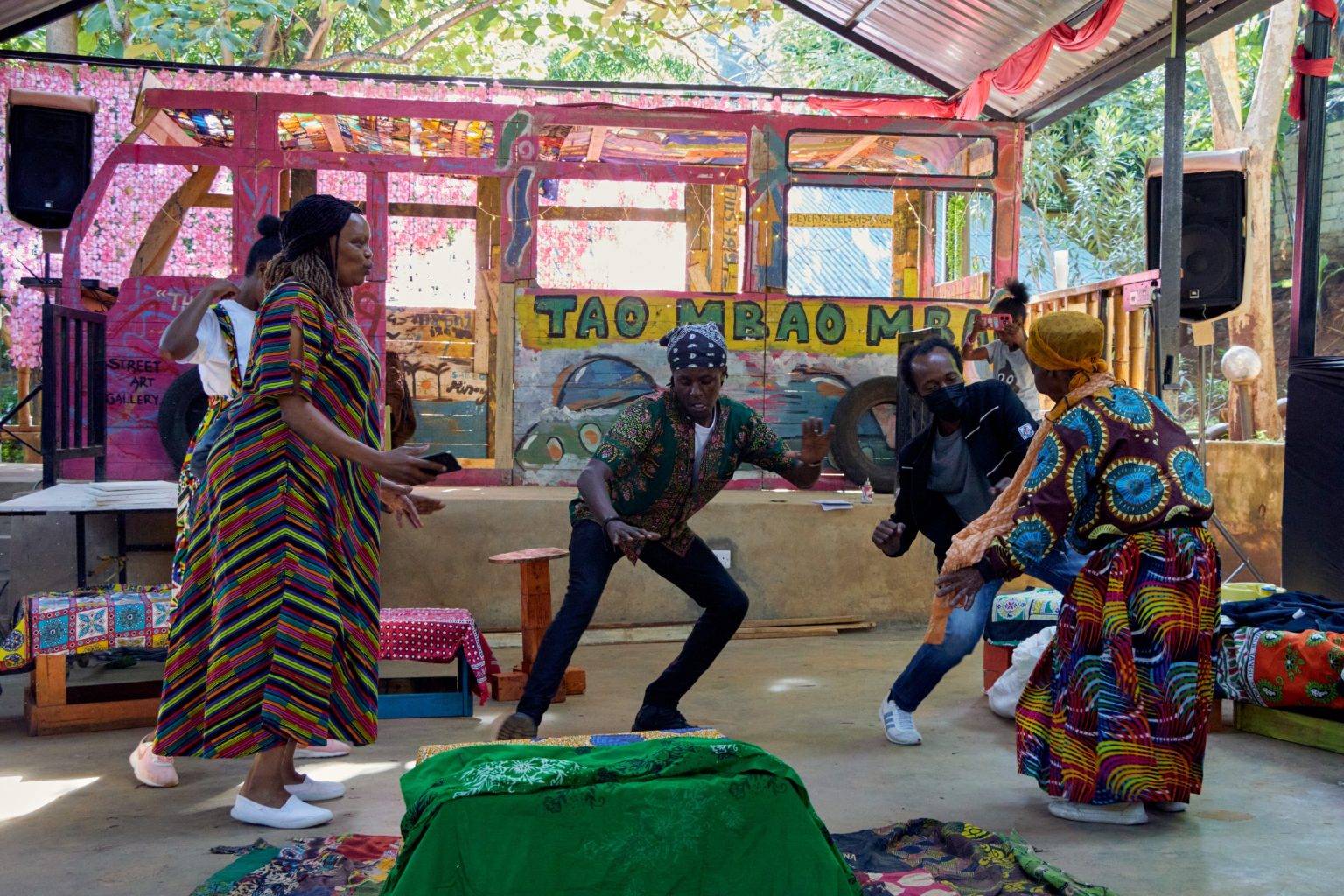
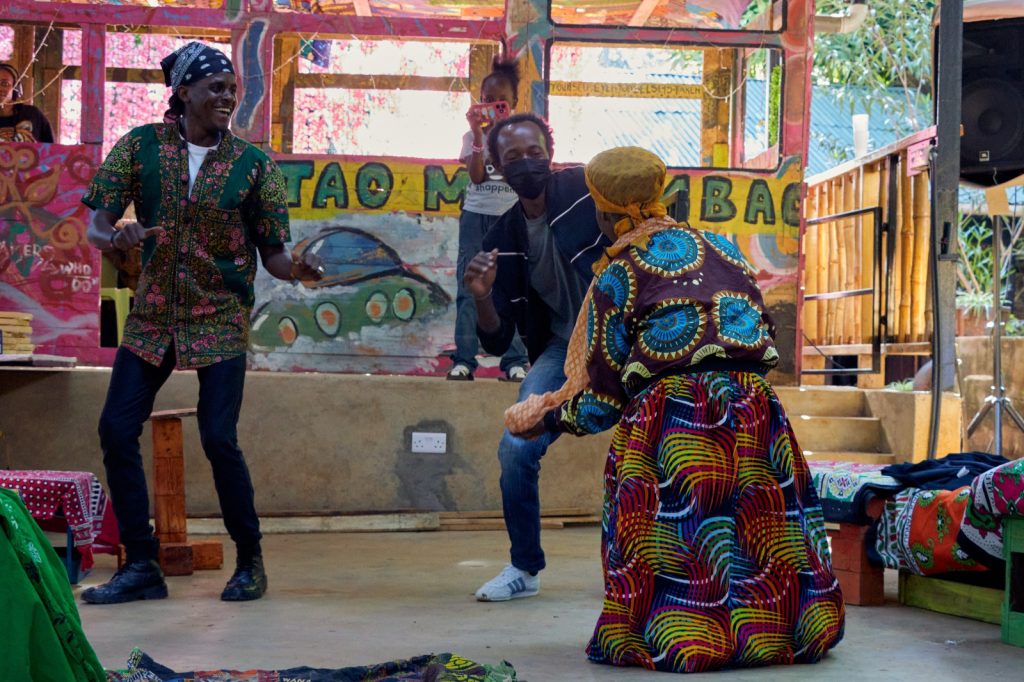
To realise the production, Vitalis enlisted two award-winning collaborators. Production designer Brian Irungu transformed an intimate venue on the outskirts of Nairobi’s CBD into a fully immersive traditional African home, with the space itself becoming the stage. Performer and storyteller Thuita Mwangi, drawing on Boalian facilitation principles, served as lead facilitator not really a performer delivering content to an audience, but a joker in the Boalian sense where he was guiding, provoking, and creating conditions for collective reflection. The audience, a curated gathering of industry professionals, creatives, and close supporters, was invited rather than ticketed. What began at noon lasted well into the evening, woven through with traditional refreshments, games, and inter-generational conversation.
As with any pioneering endeavour, the production offered lessons for the road ahead. Applied Theatre’s participatory structure, where content emerges from audience engagement rather than a fixed script, which is both its power and its most demanding challenge. Tighter pre-production frameworks, a more centrally located venue, and more sustained post-production visibility online and in artistic circles would all strengthen future iterations. The broader question of commercial sustainability in a market accustomed to ticketed shows also remains open. Vitalis’s production does not exist in isolation. Several Kenyan practitioners are simultaneously pushing at the boundaries of what theatre here can be. Alacoque Ntome has pioneered Digital Theatre through his Kenya Theatre Award-winning production I AM, which uses augmented reality and projected silhouettes to reimagine the relationship between actor and audience. Thuita Mwangi, Vitalis’s collaborator, has separately built a following with Theatre in the Streets, a guided storytelling tour through Nairobi’s history that itself borrows from Applied Theatre’s impulse to take performance off the stage and into the world. Esther Kamba, meanwhile, has turned Play Reading into a genuine cultural event, gaining enough momentum to prompt talk of its own category at the Kenya Theatre Awards.




What unites these practitioners is an instinct that Kenyan theatre must stop waiting for the audience to come to it. Boal understood this fifty years ago. The world’s leading drama schools are training a generation of practitioners in these ideas right now. And in Nairobi, quietly and without fanfare, a small number of theatre makers are arriving at the same conclusion through their own creative conviction.