



December 22, 2025: Kenya Railways issues vacation notice to Little Theatre Club, demanding space by January 1, 2025
Late December 2025: Kenya Railways deploys security personnel at the club
January 6, 2026: Stakeholders meeting scheduled.

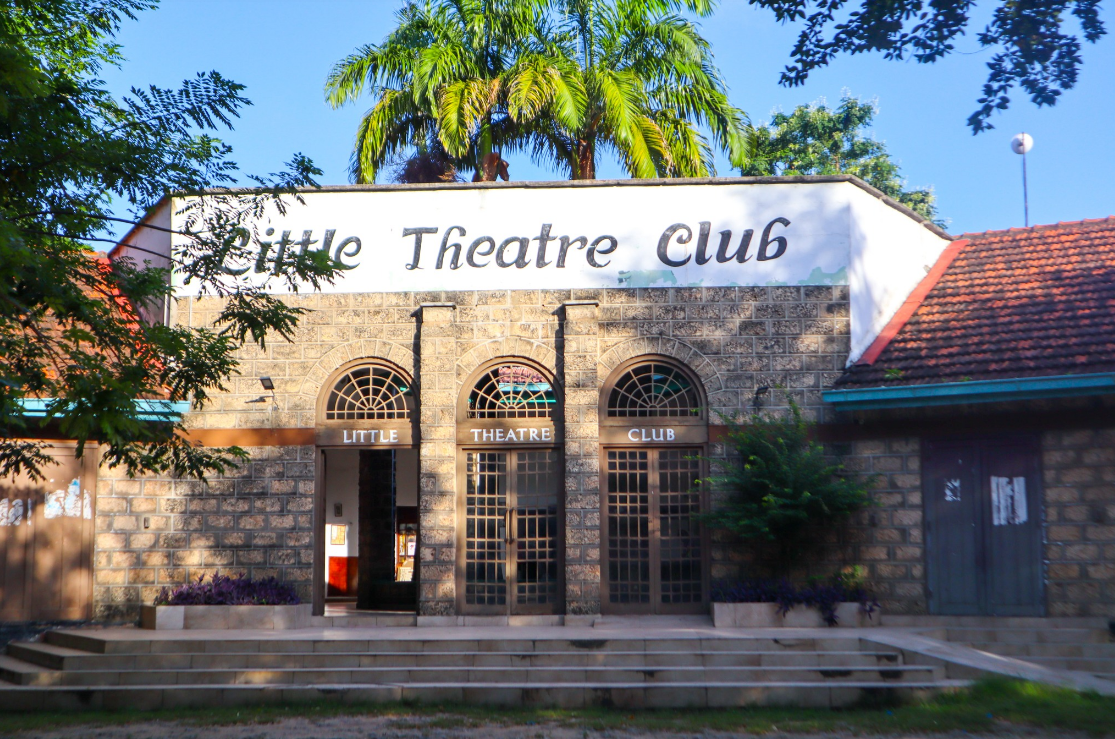
Security personnel now guard the entrance to the Little Theatre Club, deployed by Kenya Railways as the corporation moves to convert coastal Kenya’s oldest performing arts center into a vocational training institute.
As we speak right now, Kenya Railways has deployed security, its own security, at the Little Theatre Club,” club chairman Fernando Omundi told journalists at a press conference. “What does that mean? It means they are taking over.”
Kenya Railways wants to convert the 77-year-old space into a TVET institution. The club’s members and artists say they had less than two weeks’ notice. No formal consultation happened, and the security showed up before negotiations began.
The takeover would eliminate the only multicultural repertory theatre in Kenya’s coastal region. The building has been operating as a performance space since 1948. It’s also a gazetted national monument since 2002, meaning it is protected by law.
Founded by demobilized Second World War veterans, the Little Theatre Club has anchored Mombasa’s arts scene since 1948. The club’s trustees purchased the property in 1958 for £5,500, with ownership transferred to club office bearers in July 1971.
The building sits on land originally owned by East Africa Railways and Harbours, now Kenya Railways. That’s the basis of the railway corporation’s claim. But after 67 years of club ownership and 23 years as a protected monument, the legal ground is murky.
Despite all this, some critical questions remain unanswered by Kenya Railways: What’s the legal basis for claiming property sold in 1958? Were alternative sites considered? Was the monument’s status revoked through proper channels?

If there’s any communication that is coming from Kenya Railways, please let the communication be channeled in a very, very good way,” Fernando said. “Let us see the emails. Let us have a paper trail. We haven’t discussed. We don’t know what they are up to.”
What Kenya Railways would be taking over is a club that’s seen both struggle and a recent renaissance.
The numbers at the Little Theatre Club tell a story of both decline and recent revival. The club once boasted 1,000 members in the 1980s. Today, barely 20 remain with annual membership costs at just KES 1,800.
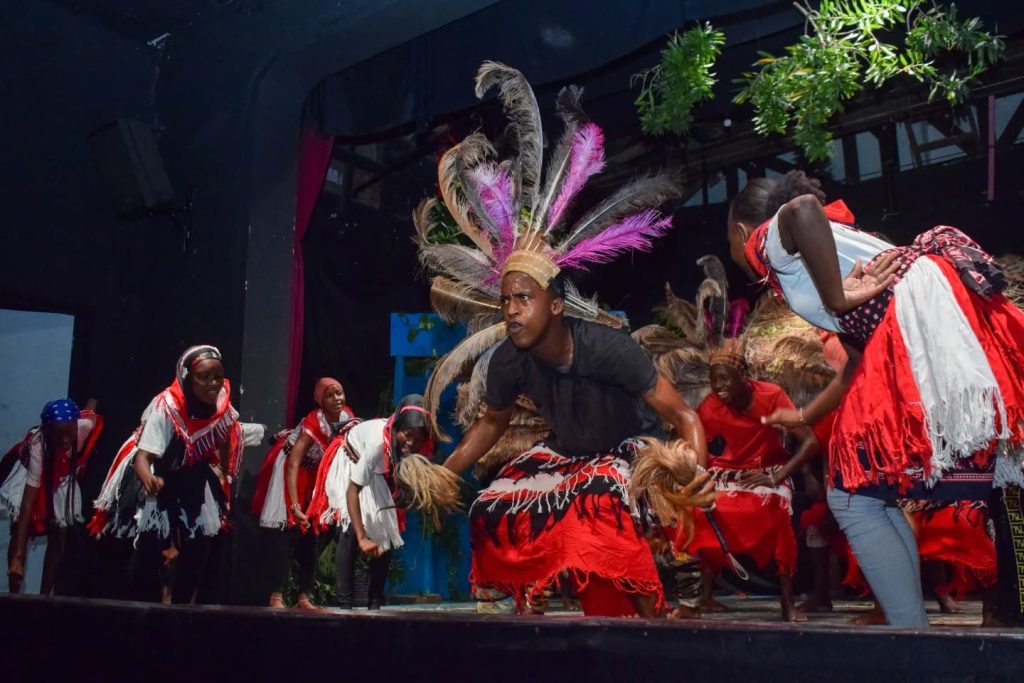
Yet under new leadership, the space has experienced a resurgence. Vice Chair Kis M, in an interview at the end of 2024, reported that in the past 11 months alone, the club facilitated over 30 community theatre dialogues and engaged more than 100 resident artists through partnerships with institutions like the Goethe Institute and Media Council of Kenya.
Muscat Moreno Sayye joined as a member in 2005, twenty years ago. He stayed through the decline,
I love theatre,” he said. “That’s where my art was nurtured.”
Fernando put it more bluntly:
This place has produced thousands and thousands of artists out there. This is our livelihood. This is where we grow. All the artists you see, the big names you see on your TV screens, most of them came from this theater.”
Which is why club officials insist they’re not opposing development—just questioning the location.
The issue of having an institute, a railway training institute on the coast, is very important,” Fernando acknowledged. “But the only question we are asking: must it be here at the little theatre club? Is it that there’s no other land, no other space that an institute can be built aside from the theater?”
Vice Chair Kis M framed it as a question of national priorities:
To replace a nationally gazetted monument and a beacon of arts and culture with a 77-year legacy with an institutional facility is to erase a fundamental chapter of our history. Development and heritage preservation must go hand in hand.”
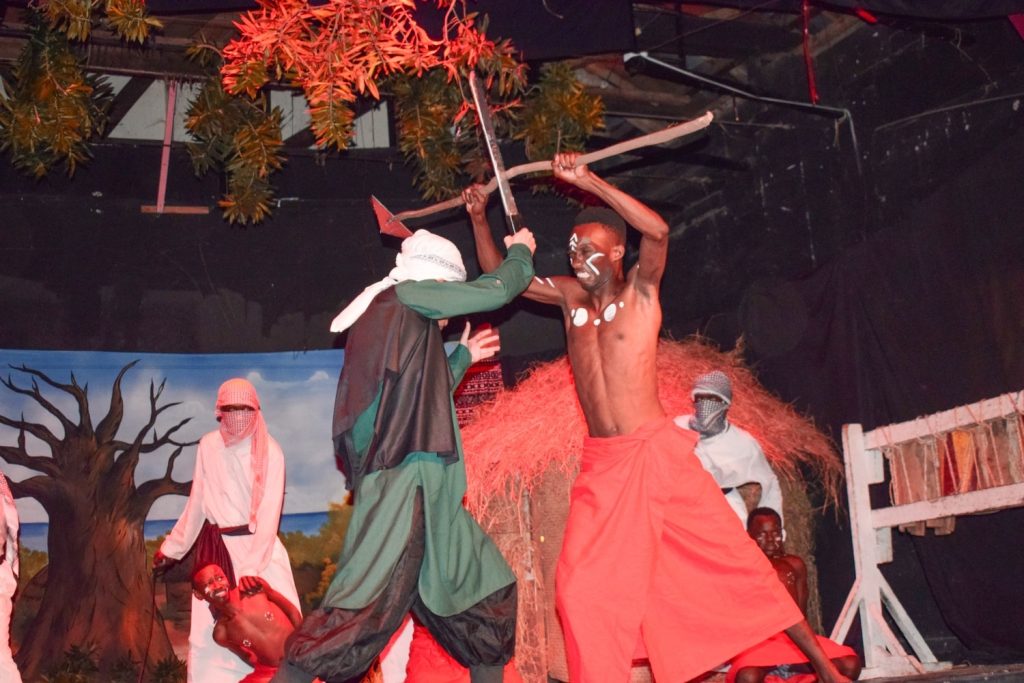
Another speaker at the press conference noted that while creatives “form about 75% of Kenya’s economy,” they lack infrastructure support comparable to other sectors. Eliminating the Little Theatre would further shrink already scarce creative spaces.
Club officials have issued appeals to multiple government bodies; so far, none have responded publicly.
They asked Mombasa County Governor Abdulswamad Sharif Nassir to mediate. They asked the State Department of Culture and Heritage to enforce monument protections. They asked the Ministry of Youth Affairs, Sports, and Creative Economy to defend creative infrastructure. They asked Kenya Railways to respect the club’s historical claim.
On January 6, members of the Little Theatre Club Mombasa Taskforce held a meeting with MVITA MP Hon. Mohamed Machele and Mombasa County Commissioner Mohamed Nur to discuss the ongoing situation involving Kenya Railways. Taskforce representatives described the engagement as a constructive dialogue rather than a confrontation, emphasizing that the creative community is not opposed to government development initiatives. They underscored the importance of practical solutions that allow infrastructure development and innovative spaces to grow in tandem, noting that cultural institutions like the Little Theatre Club play a vital role in the creative economy, youth empowerment, and national identity.
In a previous press brief, the vice chair of the Mombasa Creative Economy Task Force, Ngorobi, was direct in saying,
We don’t want to be in another 50 years, another 20 years, to have this conversation again of an expired lease or whether it’s gazetted or not. Can we have a permanent solution to this space and its legitimacy and ownership, and sole purpose as an art space?”
Artists have now rallied around #SaveTheLittleTheatreClub, and a petition demanding government intervention before Mombasa loses its last dedicated performing arts venue.
As security personnel stand watch outside the Little Theatre Club and hushed consultations continue inside, one question dominates: Will Mombasa’s oldest and sole performing arts center survive to see 80?