



In August Wilson’s Jitney, a Pittsburgh taxi station becomes the staging ground for Black economic survival under systemic neglect. In Snowpiercer, Bong Joon-ho traps humanity on a perpetually moving train where class hierarchy is literally spatial, each car a rung on the ladder of who gets to eat and who gets discarded. Vehicles in political theatre function as pressure cookers, where power dynamics become inescapable, and the question of who drives and who rides becomes existential.
Gilbert Lukalia’s Matatu Musical understands this. Written by George Nderitu, the premise is that the matatu becomes the site where our political history takes place.
The choice of a musical is not incidental, as Kenyan political theatre has long relied on song to carry critique where direct speech could not. Ngũgĩ wa Thiong’o’s Kamĩrĩĩthũ productions used music, chant, and collective rhythm to expose class power and neocolonial betrayal. In South Africa, Sarafina! turned song and movement into tools of resistance, staging apartheid as lived, embodied violence. Matatu Musical sits comfortably in this lineage, using repetition, rhythm, and humour to make political memory survivable, and therefore impossible to ignore.
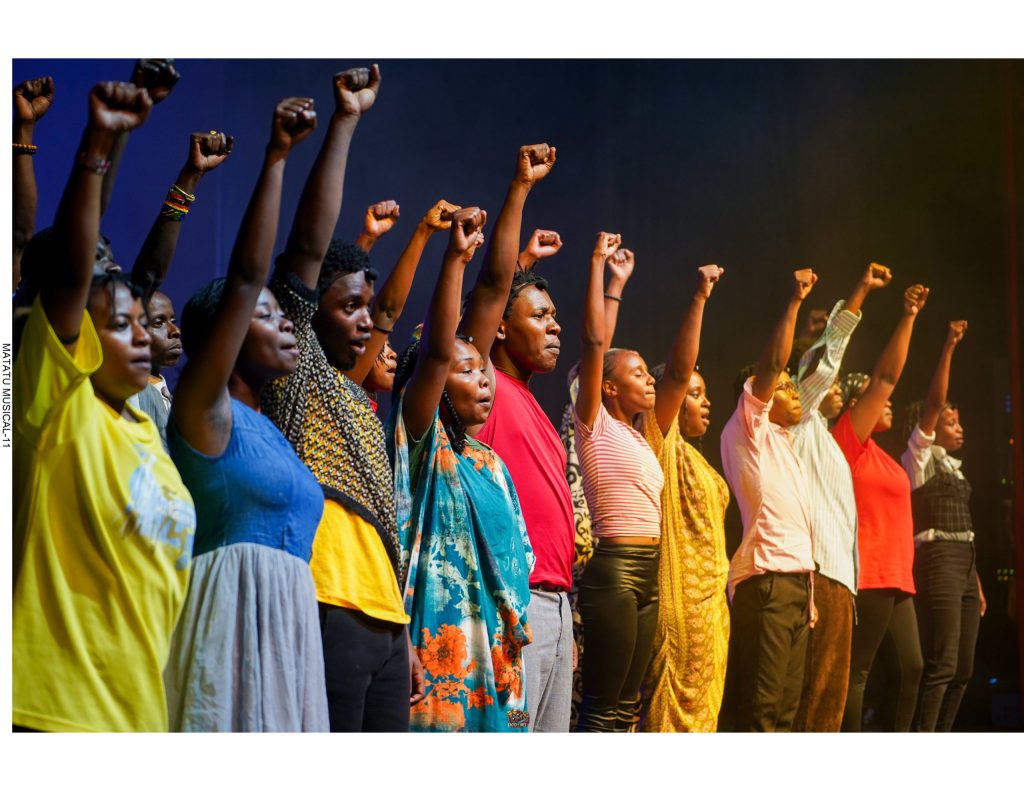
The musical follows a grandmother (Marianne Nungo) as she walks her grandchildren (Kevin Kasyoki and Susan Karani) through Kenya’s political timeline, from colonial subjugation to Kenyatta’s consolidation, Moi’s entrenchment, and Kibaki’s contested reform. Each regime takes the wheel, and each era becomes a stop, and the wananchi remain constant, complaining but compliant, moving wherever the driver decides.
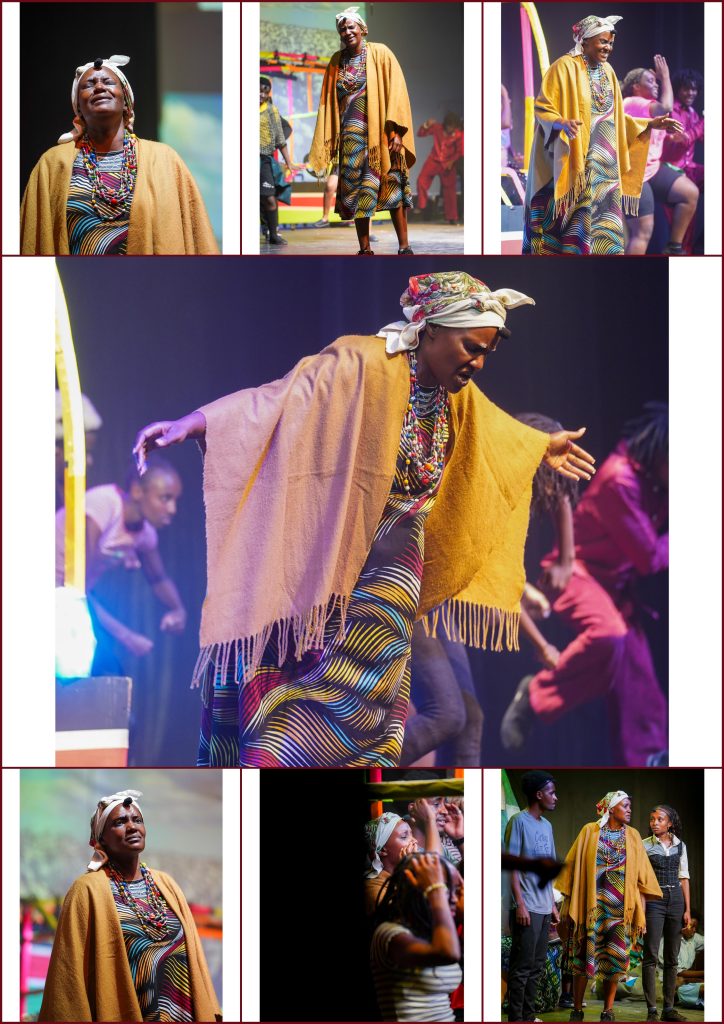
When a fish rots, do you take the fish out or do you change the water?”
This question interrogates whether we understand the system we’re attempting to fix. Are we treating symptoms, Akina corruption scandals, and bad policy, etc., or disease, which are the structural conditions that make such outcomes not irregular but normal features? More uncomfortably, Je, have we stopped caring about the distinction as long as we’re not the ones rotting first?
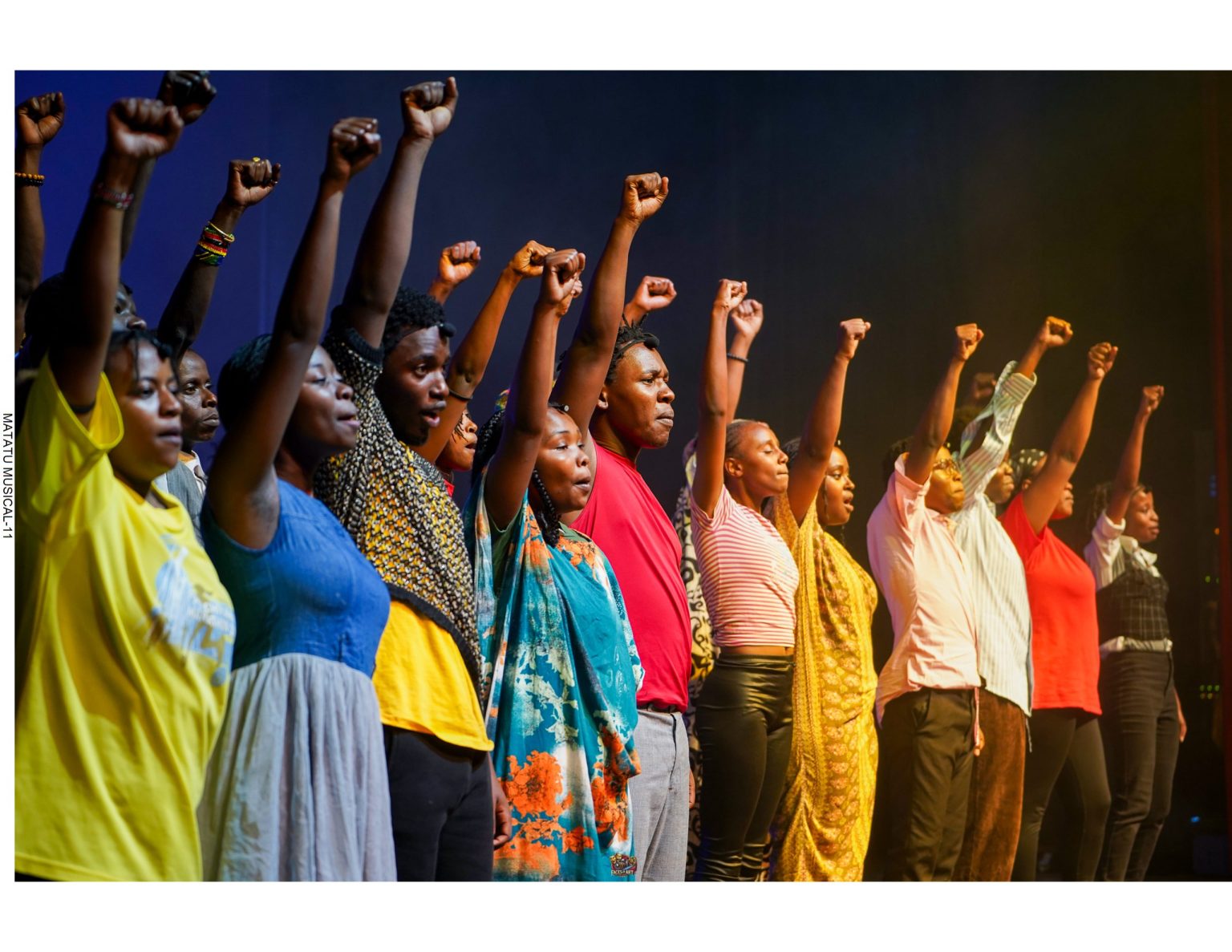
The ensemble, Marianne Nungo, Kevin Kasyoki, Susan Karani, Ignatius Neville, Dadson Gakenga, Cosmas Kirui, Jeff Omondi, Ekirapa Edwin, Cynthia Gitonga, Thuita Mwangi, Brenda Ngeso, Worship Shekinah, among others, brings energy and conviction to this material.
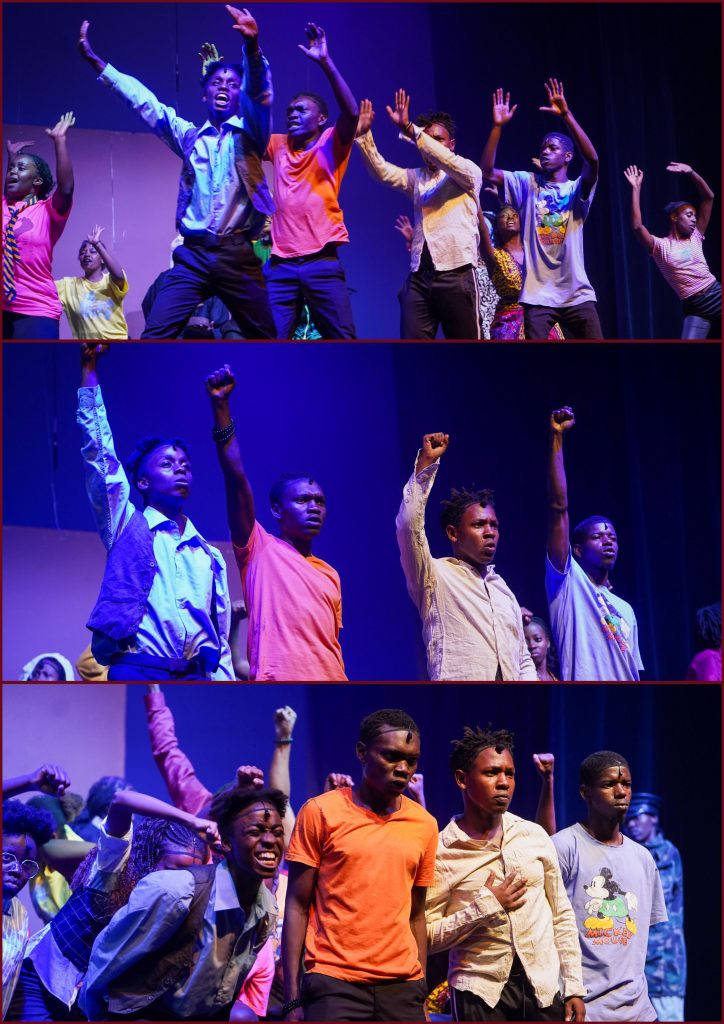
Neville Ignatius‘ depiction of H.E Daniel Toroitich Arap Moi deserves special recognition. He channels authoritarian absurdity with such precision that it’s the kind of performance that makes you laugh because the alternative is screaming. Kind of reminds me of Jonathan Groff as King George III in Hamilton.
What the production achieves technically matters primarily because it serves the political argument. The set design evokes claustrophobia and enforced intimacy, this sense that we’re trapped in this vehicle together, whether we’ve chosen it or not. Musical director Chris Adwar’s compositions blend Kenyan rhythms with elements that ground the narrative in our sonic landscape, making the historical material feel immediate rather than archived.
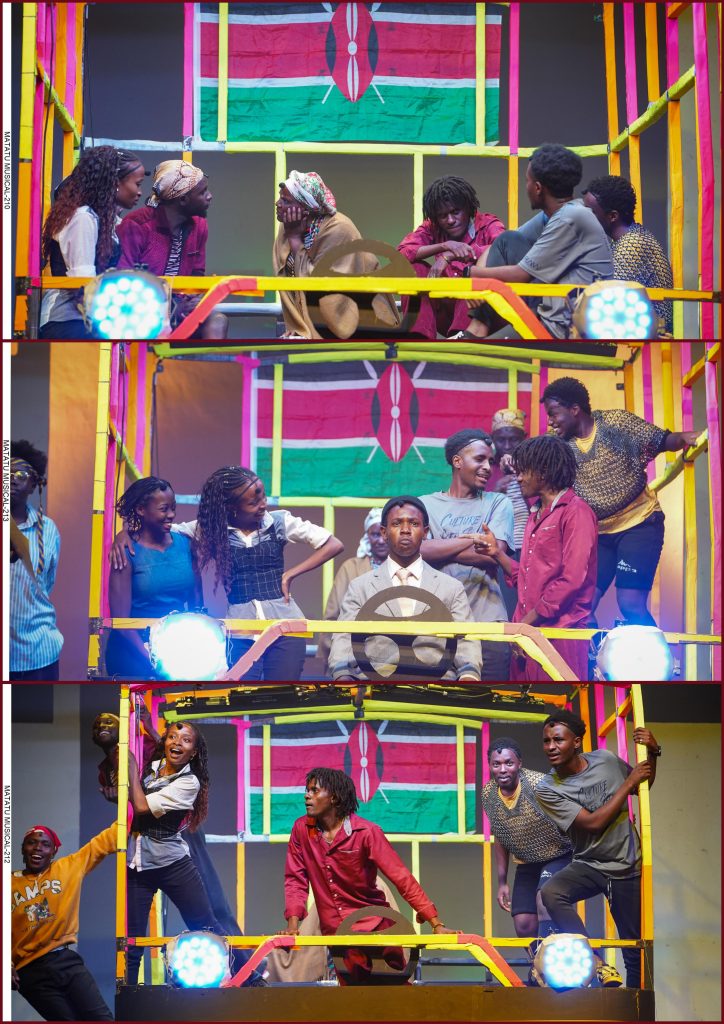
Yes, the sound struggled with volume levels in parts, and there were other technical hiccups. But these shortcomings fade against the weight of what the production is trying to say. The themes cut through clearly enough to demand our attention.
The play builds toward generational awakening, but this isn’t a triumphalist narrative, because bado mapambano. It’s the slow, grinding realization that passengers have been sold the same story “better days coming,” “development on the way,” “just wait for the next driver” for so long that entire generations have died waiting.
The question then remains, “if we’re watching someone follow the authoritarian playbook that we supposedly learned to recognize, why are we performing confusion about how this ends?”
Remember when akina Dedan Kimathi said “Heri tufe miguuni, ila tusiishi kwa magoti”,
Matatu Musical stages our history as a continuous present tense because the structural dynamics are identical. The matatu keeps moving, after all. It gets somewhere, even if that somewhere isn’t where we wanted to go. Even if people get hurt in transit, uliza akina Tom Mboya. Even if the destination keeps receding.
But while the choice to board is not exactly a choice. The choice to stay seated is a choice, and the choice to wait for someone else to shout “Shukisha” is also a choice.