



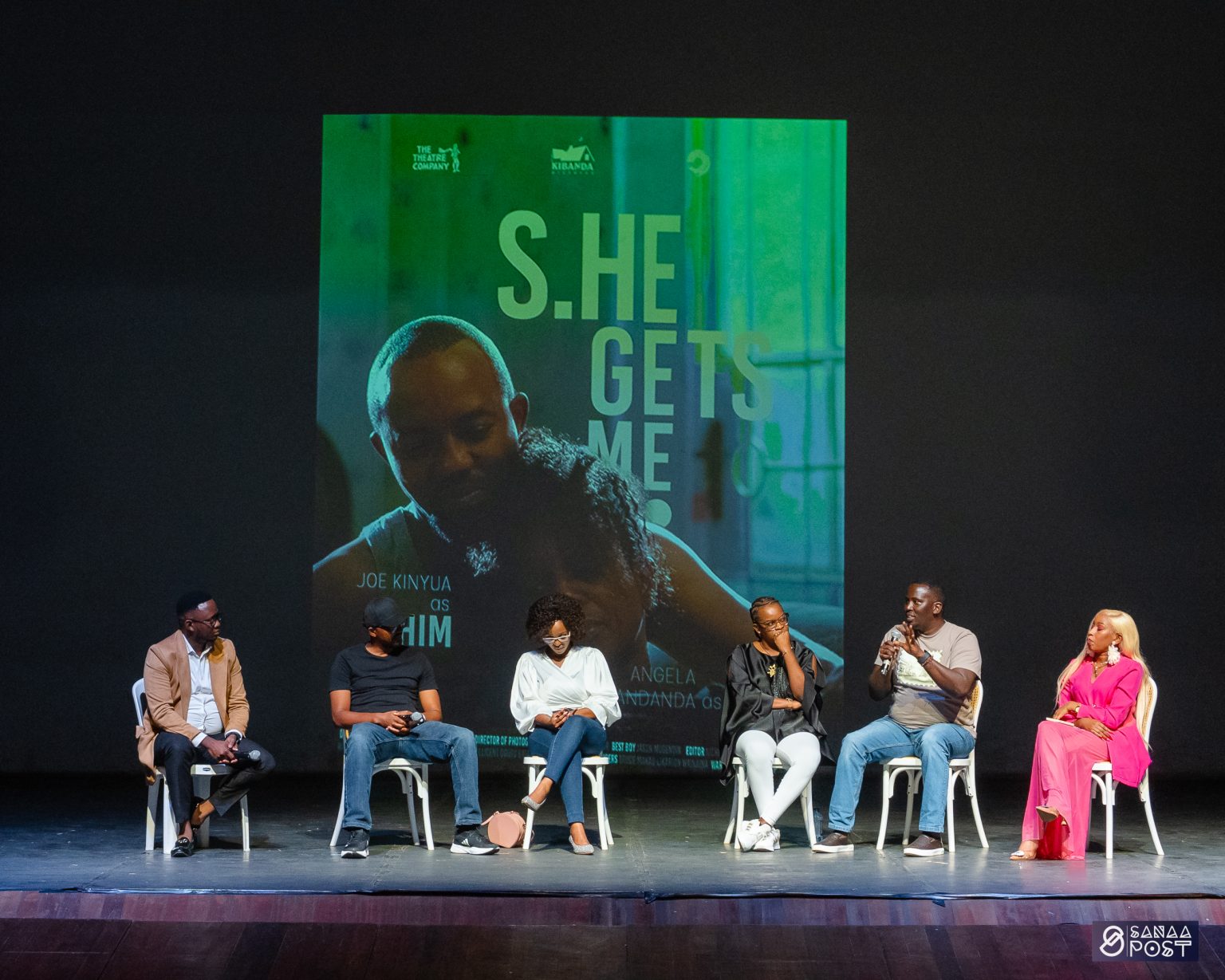

It starts at a smocha stand, as do all great love stories I believe. Two people meet over street food and discover something rare: understanding. The kind where you finish each other’s sentences, where inside jokes form instantly, where you think “finally, someone who gets me.” Then you move in together. And suddenly, inexplicably, that same person doesn’t get you at all.
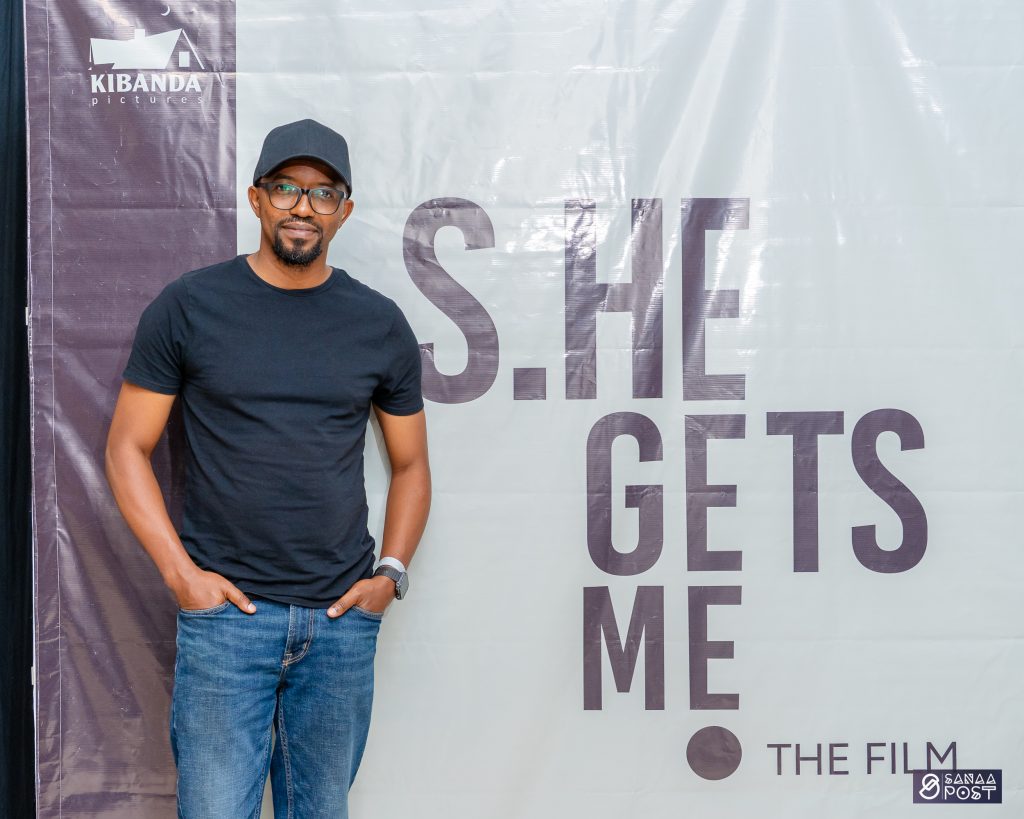
Brian Munene’s “s.he gets me” takes this familiar arc and does something unexpected with it. Working from a Key & Peele sketch about miscommunication, Munene expands a three-minute comedy premise into a feature-length autopsy of a relationship. But this isn’t your standard breakup drama with shouting matches and slammed doors, just the former though because what’s a breakup without shouting, I hear. Director Millicent Ogutu and her skeleton crew of seven strip the story down to its barest essentials: two people, Angie Mwandanda and Joe Kinyua, sitting in separate spaces, explaining to camera how they ended up here.
The confessional format is what makes this work. We’re used to seeing this style in mockumentaries like The Office, where talking heads create irony between what characters claim and what we see them do. But Ogutu does something different. There are no “real” scenes to contradict the confessionals. We only get the testimonies themselves, cutting back and forth between his version and her version of the same moments. The intimacy comes from watching them explain their choices as a couple, justifying decisions that seemed right at the time but look different in hindsight.
The editing rhythm becomes the film’s heartbeat. Ogutu establishes a give-and-take pattern that mimics conversation even as it emphasizes the impossibility of actual dialogue. He speaks. She speaks. Their accounts overlap, diverge, contradict. The cutting feels almost musical in its precision, building a kind of call-and-response structure that highlights how two people can experience the same relationship completely differently. What’s striking is how much the film asks of its actors. Mwandanda and Kinyua carry the entire weight of this story without scene partners to play off, without the safety net of reaction shots or physical blocking to lean on.
They’re essentially performing extended monologues directly to camera, sustaining feature-length performances through sheer force of presence. They succeed because Ogutu gives them the space to be messy, to contradict themselves, to reveal more than they intend. The film speaks a specific language: therapy, if the mmmhs of the millennias and above in the room is anything to go by. Munene himself has described the project as therapeutic, born from processing his own separation. There’s no villain, just two people who stopped understanding each other and didn’t know how to bridge the gap before resentment calcified into permanent damage.
Where the film stumbles is in its sound design. Too often, dialogue gets lost in the mix, forcing viewers to strain to catch crucial lines. For a movie that depends entirely on what people say, this is a significant technical weakness. When your whole film is people talking to camera and each other every word needs to land clearly.
Still, “s.he gets me” pulls off something difficult. It transforms a comedy sketch about miscommunication into a genuine meditation on how love requires constant work, how “getting” someone isn’t a permanent state but an active choice you make every day. The title’s interrupted “s.he” stops being a clever trick and becomes the film’s thesis: a period where connection should be, a severance disguised as punctuation.
Whether they make it or not, you’ll have to discover yourself. But the film has already told you the answer. Love is work, and sometimes, the work doesn’t save you. The film will be screening at Anga Cinemas.