




This weekend I sat in a theatre watching J. Mirichi perform in a play about marriage, alongside his actual wife. It was wholesome, admirable even, but deeply unhelpful to anyone who once watched him on screen and felt things they weren’t ready to discuss. Elsewhere, Nick Mutuma, has apparently graduated into the dignified business of directing and even taken up hiking. And as I sat down afterwards to perform my sacred civic duty of doomscrolling, I stumbled upon Neville Misati on Instagram who was demonstrating how to cook crisps. Great recipe, I actually saved it, but that is not the point. Lenana Kariba is now on Bridgerton, pandemic!!
Our TV sweethearts are growing up, moving on, becoming people, and somewhere in that transition, Kenya’s screens have developed a visual vacuum. The teenagers of today don’t have a national face to crush on. No one is cutting out a photo from a magazine and taping it above their bed. No one is watching all the shows just because guy X is in them.
You know that Instagram trend
Dad, what were you like in the 90s?”
then enter prime Morris Chestnut, impossibly cool, all leather jacket and cheekbones and cinematic lighting? Enter Shemar Moore, just to name a few.
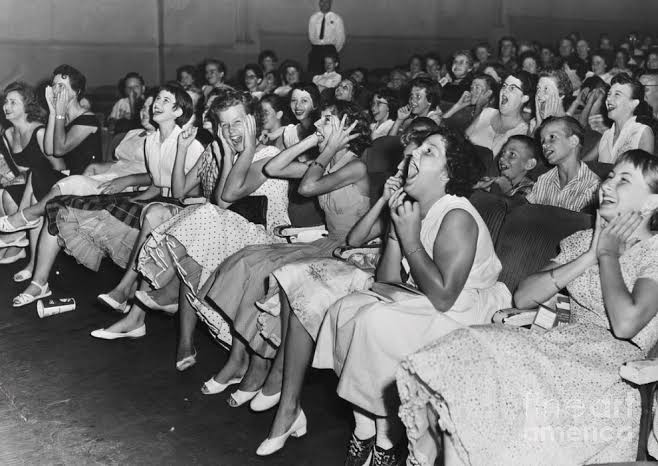
Every generation inherits a visual mythology. A face onto which desire, aspiration, and fantasy get projected.
Hollywood has engineered a perfect system. When Brad Pitt was prime Brad Pitt, the industry understood exactly what it had and maximised accordingly. You know the works, magazine covers, romantic dramas, and close-ups that lasted just a beat too long. My personal favourite, Michael Ealy and his baby blues. Hollywood took one look and said: we are going to build an entire emotional ecosystem around this man’s face. Next came the rom-coms, and the longing close-ups. Carefully calibrated lighting that made women across the world feel personally seen by those blue eyes.
And when that generation aged into character roles and podcasts about how fatherhood changed them, the machine simply produced the next batch. Enter Damson Idris. Enter Timothée Chalamet, Enter Michael B. Jordan. They offer a different aesthetic but the same underlying function which is to give audiences a face to feel something about.
While their system renews itself, the pipeline has gone quiet in Kenya. We do not understand that there is genuine science underpinning the heartthrob economy.
Psychologists use the term parasocial relationships to describe the one-sided emotional bonds audiences form with media figures, bonds that feel surprisingly real despite being entirely unrequited. As Dr David Giles noted in his foundational work on media psychology, these relationships develop through repeated visual exposure, in that the more frequently a face appears on screens, posters, and social feeds, the more psychologically familiar and compelling it becomes. Familiarity, counterintuitively, breeds fascination rather than contempt.
Film theorist Richard Dyer, writing on the construction of stardom, argued that stars are not simply talented people who got lucky but are manufactured cultural texts, shaped through image-making, publicity systems, and carefully designed visual repetition. The close-up that lingers a second longer than necessary. The styling that transforms an actor into an icon. The magazine ecosystem that amplifies a face until it becomes culturally unavoidable. “A star image,” Dyer wrote, “is always extensive, multimedia, intertextual.” In plain English, you have to be everywhere before people can be obsessed with you.
At this point you may be asking, so where does Kenya fit in this framework?
Part of the answer may lie in our scripts. Kenyan television has long prioritised social realism, ensemble casts, and issue-driven storytelling (release us!). All of which are genuinely important artistic goals of course, but these frameworks rarely produce the kind of singular, charismatic protagonist around whom star culture crystallises. You cannot manufacture longing for a character who is mostly a vehicle for a public health message, however well-intentioned.
The other part is image-making infrastructure. A heartthrob is not born in a casting room. They are built in photo shoots, styled into icons, amplified through media ecosystems willing to put one face on a hundred covers. We also need to talk about celebrity culture, but that’s a topic for another day.
There are promising performers beginning to emerge, we know them, names that flicker with the right kind of potential. Cultivating a cultural icon requires intention, scripts that let charisma shine, directors who understand what a well-deployed close-up can do to an audience, stylists who build images rather than just outfits, and editors willing to put a beautiful face on a cover and simply let the audience feel something about it.
Every generation deserves its own answer to that inevitable question: Dad, what were you like in the 90s?
Right now, Kenyan teenagers are growing up without the photograph, we are slowly losing our culture.
Someone, please, put a face on a poster. The people are ready to feel things.
To book exclusive events with a TICKETING PARTNER, check out tickets.sanaapost.com 😎👊🏾