


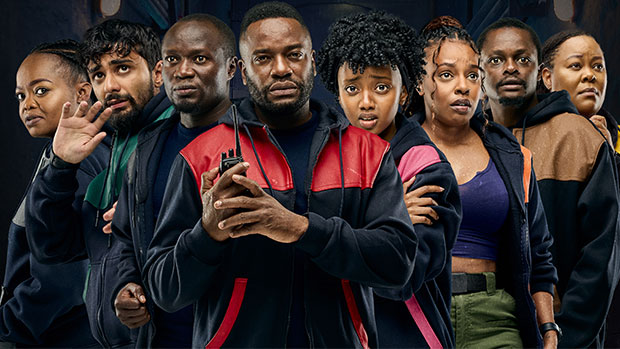

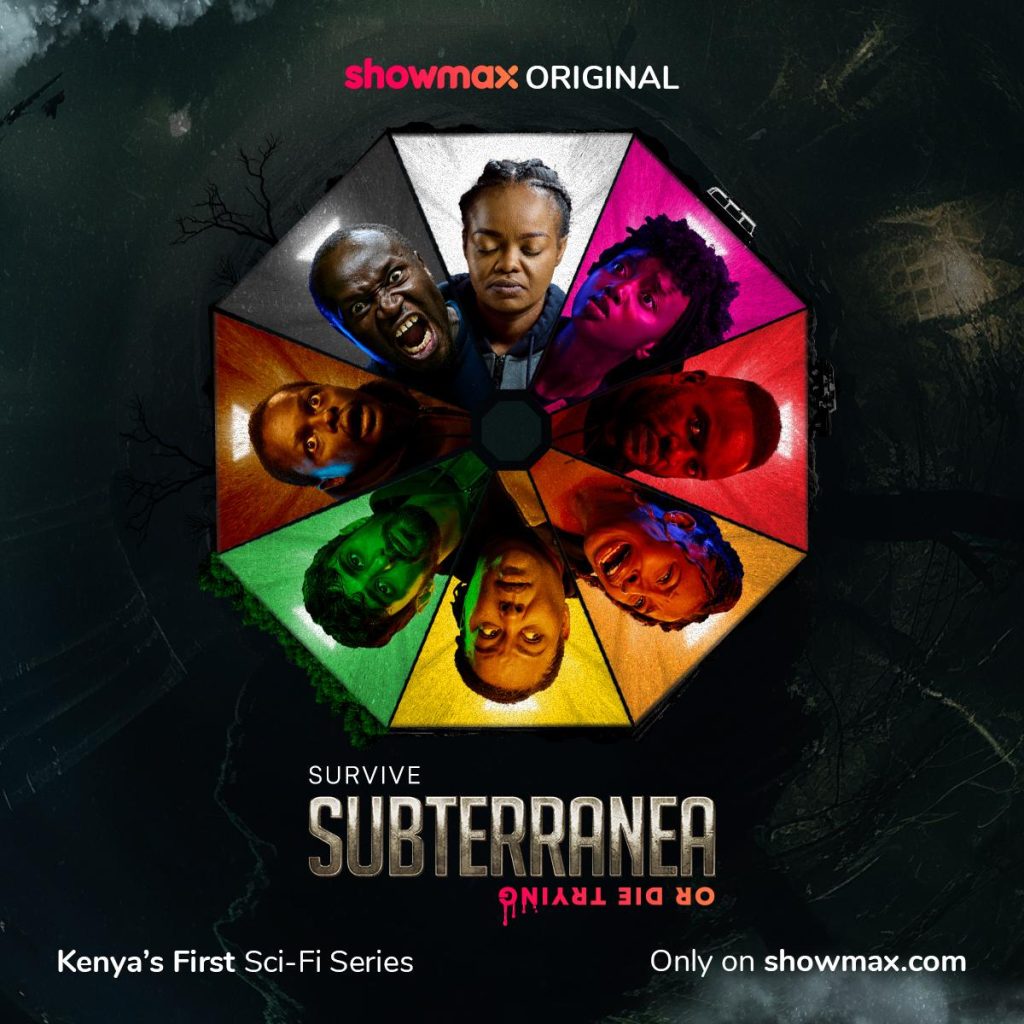
The recently concluded Kalasha International Film and TV Awards 2026 once again brought together the best of Kenyan film and television, celebrating excellence across acting, directing, writing, and production. It was a competitive year—described as intensely contested—with productions pushing both creative and technical boundaries. Among the standout contenders was Subterranea, a series that did not just participate in the awards—it arrived with weight. Created by Brian Munene and directed by Likarion Wainaina, Subterranea premiered on Showmax on 26 September 2024 as an eight-part series. The show secured seven nominations, positioning itself among the most recognized television productions of the year.
These nominations included:
- Best Lead Actor (Melvin Alusa)
- Best Lead Actress (Foi Wambui)
- Best Supporting Actor (Biko Nyongesa)
- Best Supporting Actress (Nice Githinji)
- Best TV Director (Likarion Wainaina)
- Best TV Scriptwriter (Likarion Wainaina, Brian Munene, Arnold Mwanjila & Martin Kigondu)
- People’s Choice Award – TV Drama
Although the series was not nominated for Best Visual Effects, which it largely employed, its nomination across performance, writing, and direction already suggests that it met the criteria typically associated with excellence: compelling acting, thoughtful writing, and a cohesive story.
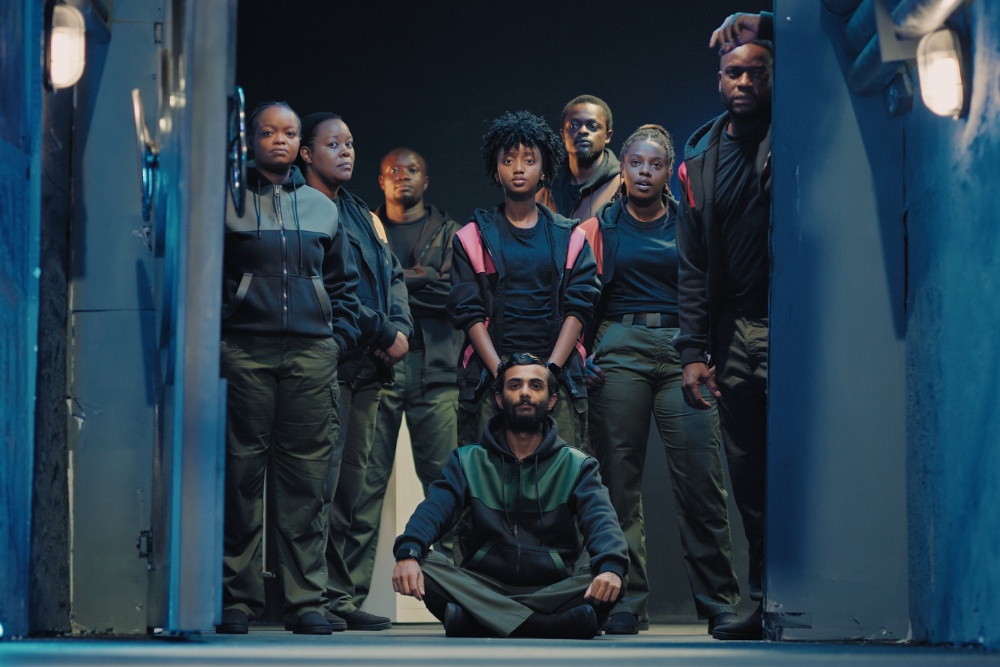
From the outset, the series positioned itself differently. It was not just another entry into Kenyan television—it was Kenya’s first sci-fi psychological drama series, following eight participants in a controlled underground experiment that spirals into a survival situation when the outside world collapses. The premise alone signaled ambition. But more importantly, it signaled direction. By choosing sci-fi, the creators deliberately stepped beyond what is familiar, easily fundable, and readily consumable.
But what makes the series remarkable is how it interprets sci-fi. Instead of spectacle, it focuses on human psychology—how people respond to confinement, uncertainty, and collapse. This aligns with the core of sci-fi as a genre: exploring how real or imagined science affects human behaviour. That choice matters because it proves that Kenyan sci-fi does not need massive budgets, futuristic cities, and heavy computer-generated imagery (CGI). It needs ideas, and that is precisely what Subterranea delivered.
The Kalasha nominations clearly acknowledged Subterranea’s strength in acting across both lead and supporting categories, directing vision, writing, and narrative structure. But it ultimately did not win and that raises a necessary question.
What does the industry reward—excellence within the familiar, or courage beyond it?
Because Subterranea was not just competing as a drama. It was competing as a genre disruptor. While the nominations at Kalasha signal openness, a willingness to recognize work that pushes boundaries. The lack of a win, however, suggests that the center of gravity still lies with the familiar. However, this has broader implications.
Globally, the most competitive film industries are not defined by a single genre but by their ability to diversify. From science fiction and fantasy to thrillers and hybrid narratives, genre filmmaking has enabled industries to expand their reach, attract international audiences, and push creative boundaries. These forms travel more easily across cultures, inviting viewers into worlds that are not confined by local realism. For Kenyan cinema, which continues to grow in both ambition and visibility, this presents both a challenge and an opportunity. Remaining within the comfort zone of drama risks limiting not only creative expression but also global competitiveness. While drama will always have a place—it is, after all, a powerful vehicle for storytelling—it cannot be the only vehicle. An industry that does not experiment eventually stagnates.
The role of Showmax in this conversation cannot be ignored. Streaming platforms operate differently from traditional broadcasters. They are driven by audience data, global content trends and demand for differentiation. The fact that Subterranea was commissioned and distributed on Showmax signals there is an appetite for Kenyan stories beyond conventional drama. While awards may still lean toward established formats, streamers are already investing in experimentation, genre diversity and bold storytelling. In that sense, Subterranea was not ahead of audiences—it was ahead of institutional recognition.
Looking at the Kalasha criteria—storytelling, performance, and production quality—Subterranea met all three. But beyond that, it achieved something more significant. It expanded genre possibilities in Kenyan television. It proved sci-fi can be locally grounded and culturally relevant. It further demonstrated that psychological storytelling can carry high-stakes narratives without spectacle. And perhaps most importantly, it shifted industry imagination.
Beyond the Outcome of the awards, Subterranea may not have taken home a Kalasha, but it did something arguably more powerful—it redefined what Kenyan television can attempt. And if the future of the industry is shaped by those who take risks, then this is a moment that calls for reflection. If Kenyan cinema is to compete on a global scale, it must begin to reward not only mastery of established forms but also the courage to expand them. Filmmakers who take risks should not be positioned at the margins of recognition—they should be central to the industry’s evolution.
About the writer:
Dr. Susan Gitimu
Dr. Susan Gitimu is a Kenyan film and media scholar, lecturer at Kenyatta University, department of Communication Media, Film and Thaetre Studies, and practitioner in the creative industries. She is the founder and director of the Women in Film Awards (WIFA), a platform dedicated to amplifying and celebrating women filmmakers in Kenya and beyond. Her research and practice focus on participatory filmmaking, media and communication, gender representation, and film as a tool for social change. She also works on emerging media practices, including artificial intelligence and its implications for storytelling and information behaviour. Her work bridges academia and industry, with a strong commitment to community-based knowledge production and inclusive creative ecosystems.
To book exclusive events with a TICKETING PARTNER visit tickets.sanaapost.com 😎👊🏿