



The 2nd edition of the Diani film festival has taken a break and is set to resume on the 31st of July in Nyali Cinemax. I caught the first half of the festival, which took place from the 24th to the 27th of July at Safari Beach Resort in Diani. The 4-day screening revealed a lot, not just about festivals, but about our own cinema culture as Kenyans.
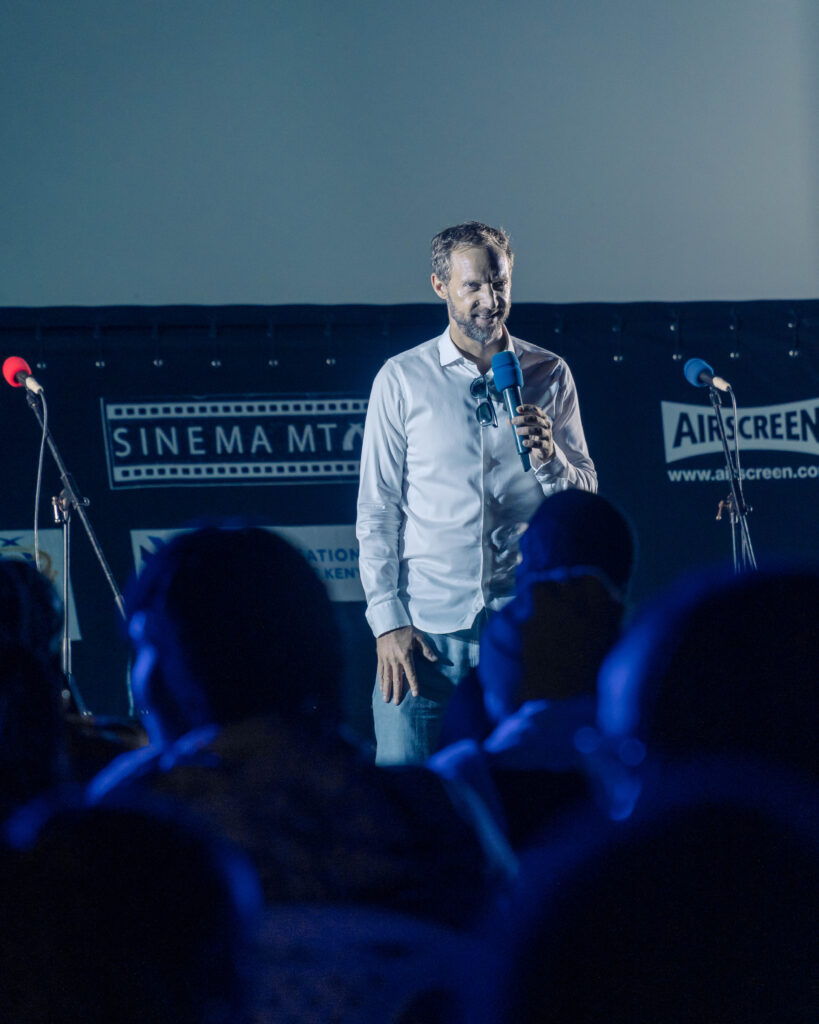
While speaking to him, the founder, Mr. Mathieu Roy, revealed that the festival was started because he recognized a shortage of cinemas in the country, especially in Diani. His goal was to bring together cinema lovers, both within and outside the industry, and spark conversations that could enrich Kenyan filmmaking. Talking with the co-director, Krysteen Savane, reveals a similar ambition: to make the festival a space that invites filmmakers to share a screening and commune with the filmmaker’s vision of their work. In support of this agenda, the festival also held workshops by Emmanuel Gras, who taught cinematography, and Meryam Joobeur, who taught directing.
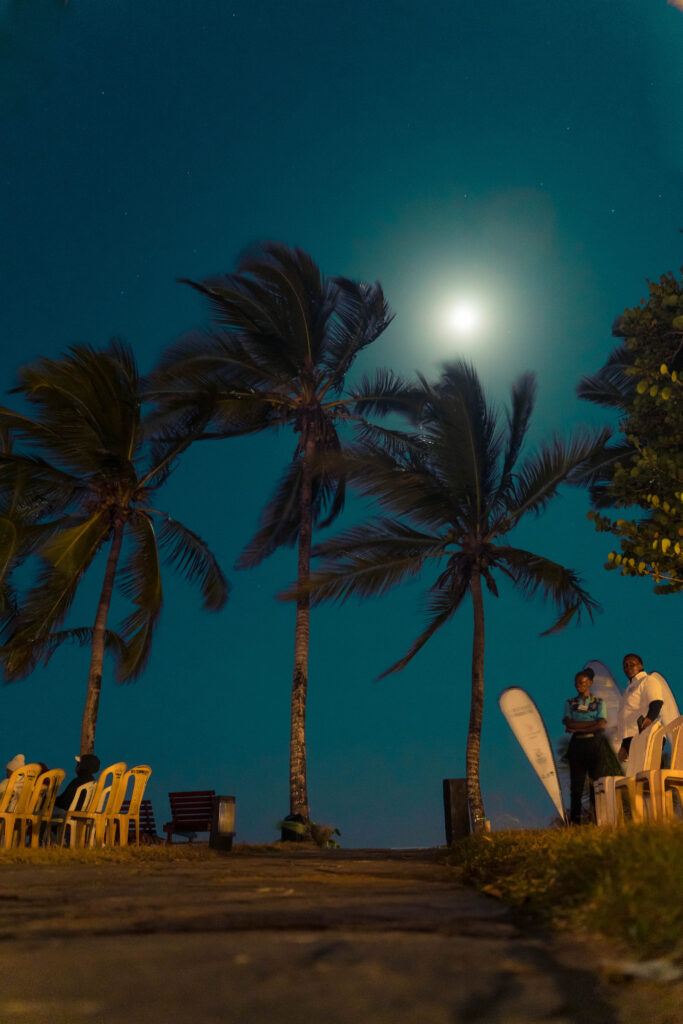
The festival screened one carefully selected film a day, by the ocean. This format ensured there was plenty of time for interaction with the filmmakers. After each screening, a discussion was held by the ocean, revealing a genuine appetite for such spaces. Filmmakers themselves seemed struck by how differently the audience interpreted their work. What struck me most was the makeup of that audience. It wasn’t just filmmakers. In fact, in 3 out of the 4 screenings, I spotted a mother with 2 young children. I’m talking about tagging-on- her-skirt- young. When I asked her why, she expressed curiosity about films. Watching her, I’d argue a festival’s success shouldn’t be measured just by turnout, but by how many people from the local community it draws in. And to attract a mother with an infant and a preteen, now that is something.
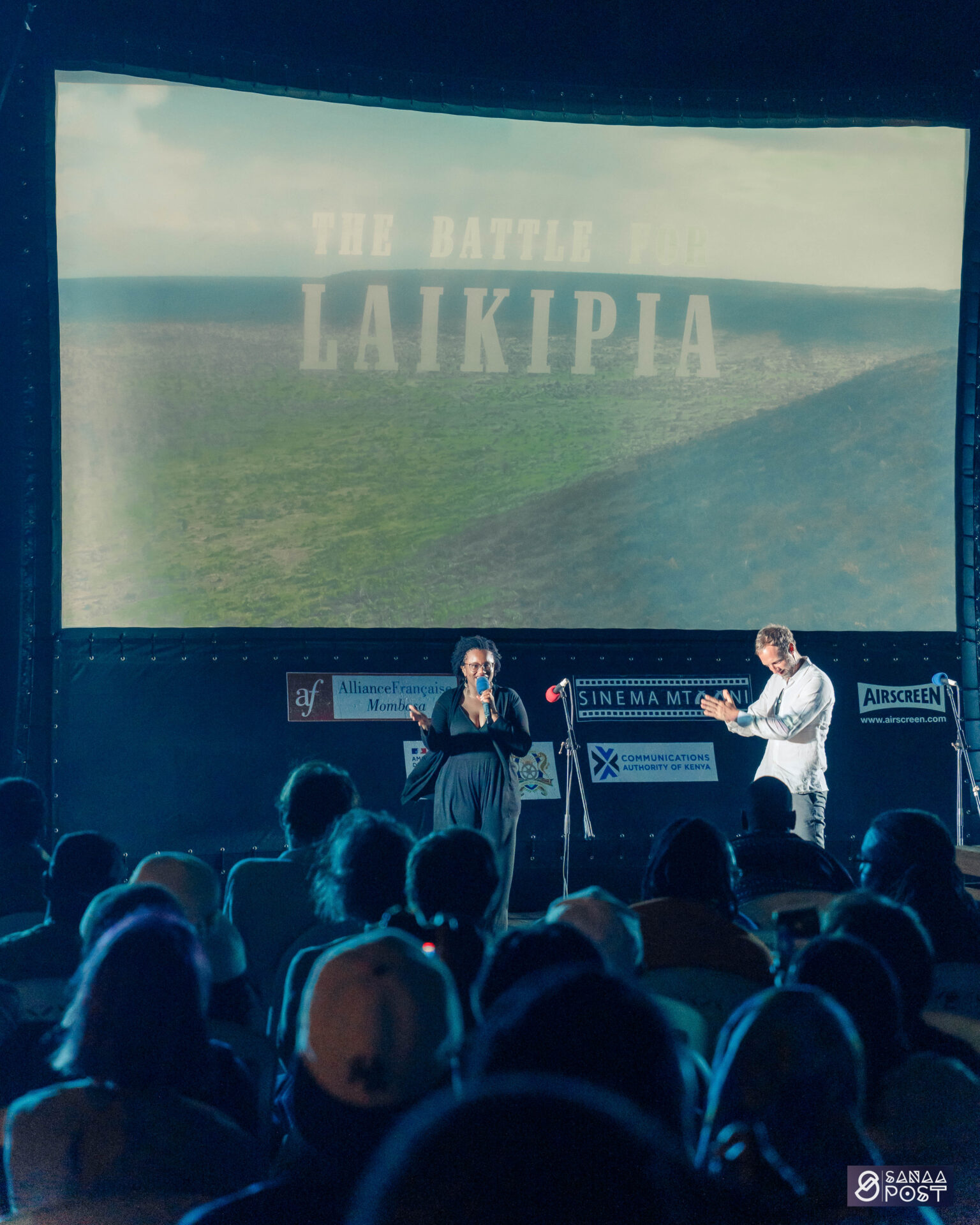
As a writer myself, I was exposed to different formats of telling a story. I was particularly challenged by Meryam Joobeur’s Who Do I Belong To, its use of imagery, and its showcase of local Tunisian culture. This particular Q&A session with the filmmaker took me back to my literature classes. It was interesting to hear the different interpretations of the film, which also served as a class on how audience perceptions of films differ. This was also shown by the film that sparked the most debate: The Battle for Laikipia, by Daphne Matziaraki and Peter Murimi. It tackled a controversial land issue from both sides, and audiences argued about it long after the credits rolled.
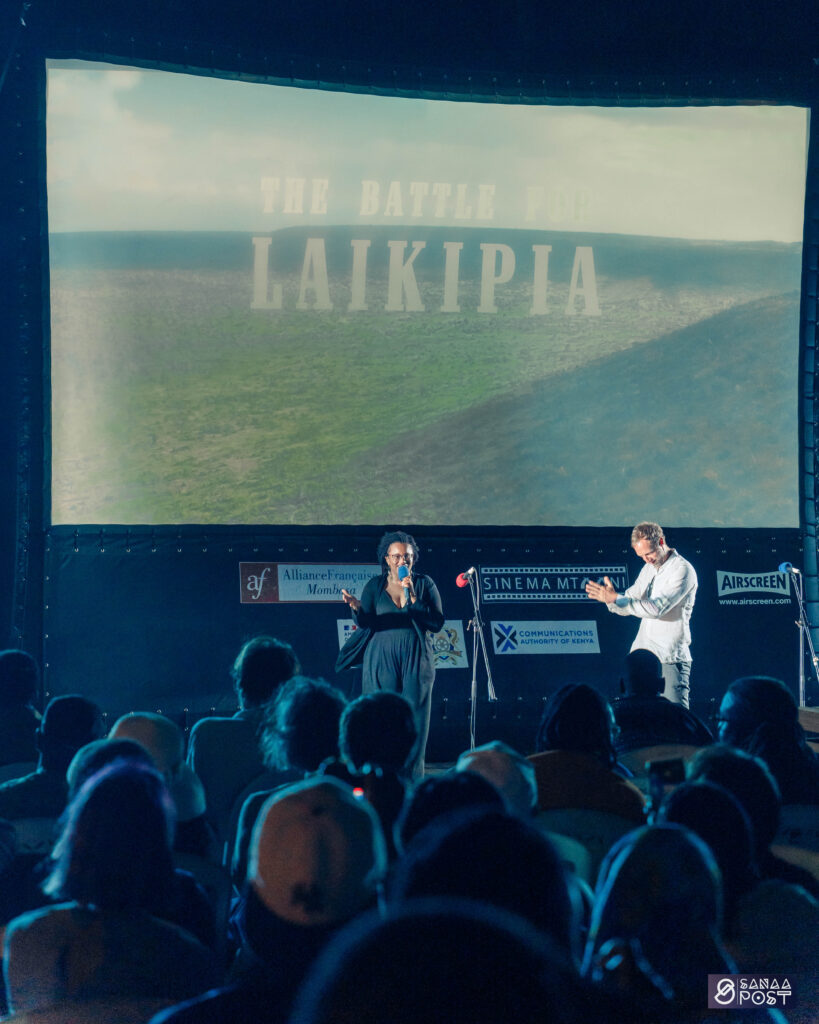
This is not to say the rest of the films were not spectacular. We started very strongly on Friday with The Eyes of Ghana by Ben Proudfoot, a documentary that evoked patriotism and encouraged archival. Saturday changed gears a bit with Makala by Emannuel Gras, a documentary about a man who traveled more than 50 km to sell charcoal to buy medicine for his child. This documentary explored the human condition and demanded that we tell our stories. Sunday raised the stakes a bit with The Battle for Laikipia, which fueled the spirit of revolution and paved the way for Who Do I Belong To, a film heavy in imagery that presented a new perspective.
Kenya has seen a rise in film festivals recently. Now in its second year, Diani Film Festival promises to keep boosting the area’s cinema culture. In a brief chat, Emmanuel Gras pointed to a lack of equipment as a major challenge for students in the cinematography workshop.
The chat with Mr Mathieu also revealed a lack of budget, which has plagued them as a festival, adding to the long list of things that don’t work in this industry. In the past year, whether in a plot to earn favor with the artists, the government has shown interest in the industry, even finding itself at the Kalasha film festival. Still, when the industry needed them the most, the government disappeared.
A festival is rarely just a festival. It is a meeting point where audiences, filmmakers, distributors and potential investors all occupy the same room. Even when no deals are signed, relationships are built. Remove that space, and everyone retreats into their own corner of the industry. If festivals are forced to survive on goodwill alone, it becomes much harder to convince investors that Kenyan cinema is an industry worth betting on.
Most of all, this may be a lesson in investor confidence. Regardless of the government of the day, we need an industry that works enough to attract investors and encourage a flow of money in the industry, but ni kama haiwork. If a film festival does not promise distribution, but instead heavy bleeding of the pocket, how then do we save ourselves as an industry?
Answering this question should be our top priority, especially with the mushrooming of festivals, all claiming to advance the local film industry. Seeking out the people actually trying to answer it matters more than ever.
Diani Film Festival is one of the ones trying, and it continues on the 31st and 1st of August at Nyali Cinemax. The closing night raises the stakes further: the festival wraps with an awards night for short films, with Christopher Nolan expected to attend and present awards to the young filmmakers. His appearance will undoubtedly attract headlines. But awards aside, the real prize on offer is proximity, to craft, to conversation, to people further along the road you’re on. A quick search on these films will reveal that some are made by Oscar-winning filmmakers.
If you’re a filmmaker, especially one at the Kenyan Coast, you should be at Nyali Cinemax, ready to learn, whether directly from the sessions or simply from being in the room and listening.
To book exclusive events with a TICKETING PARTNER visit tickets.sanaapost.com 😎👊🏿